
THE BIRTH OF FREEPORT
How a Pine Forest Became One of the Caribbean’s Most Ambitious Cities
In 1955, the island was almost entirely pine forest. Within a decade, one of the Caribbean’s newest cities had begun to emerge.
Discover the remarkable—and sometimes controversial—story of how Wallace Groves helped transform a pine forest into one of the Caribbean’s most ambitious planned cities.
WALLACE GROVES, Visionary and Entrepreneur.
Widely regarded as the founder of modern Freeport, Groves was a brilliant financier whose achievements were later overshadowed by fraud convictions and alleged organized-crime associations.
After serving a prison sentence, he bought Little Whale Cay in The Bahamas and moved there after his release in 1944. Whilst there he bought the struggling Abaco Lumber Company for 50,000 pounds and relocated it to Pine Ridge on Grand Bahama.
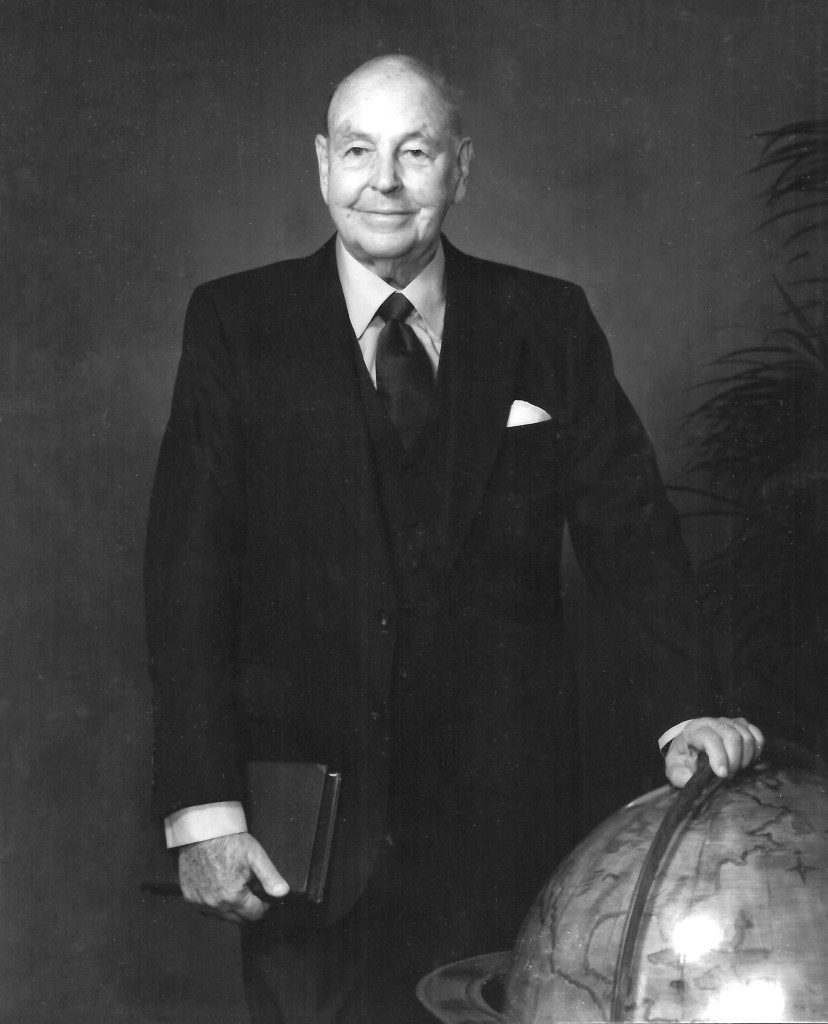
In 1954 he sold the company to Owens-Illinois for $4,000,000 cash. Using the proceeds from the sale, together with financial backing from other investors, Groves developed and operated the free-trade zone, resort and casino development that became Freeport. His business empire has long been associated with organized crime through alleged financial links to Meyer Lansky and Bahamas Amusements
The signing of the Hawksbill Creek Agreement.
Groves, seated left, had his lawyer and friend Stafford Sands (standing left) negotiate a deal with the Bahamian government allowing him to purchase 211 square miles of Grand Bahama.
Much of the land cost only £1 (about US$2.80) per acre. The agreement also granted extensive tax exemptions for up to 99 years, laying the foundation for Freeport’s rapid development.
To manage the project, Groves created the Grand Bahama Port Authority, the GB Development Company (Devco) and Bahamas Amusements which controlled the island’s casino operations.
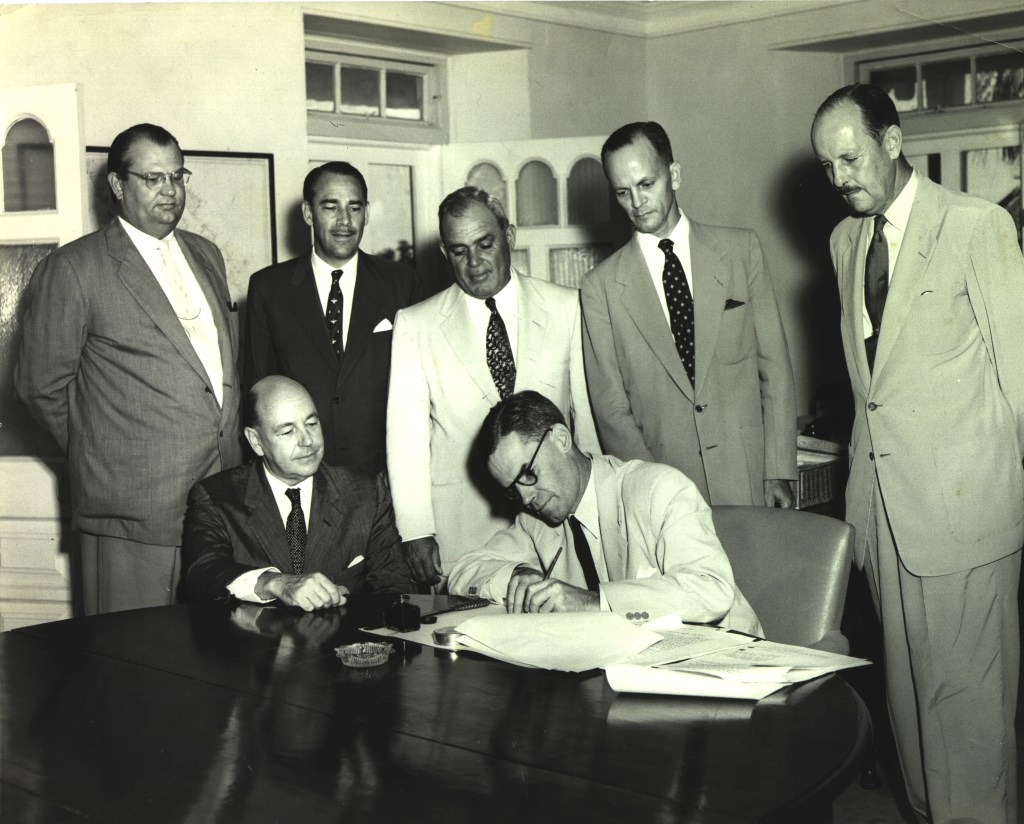
With the signing of the Hawksbill Creek Agreement, Freeport’s development could truly begin. A deep-water harbour was dredged, roads were constructed, including the GB Motorway, and homes, hotels and businesses soon followed.
The economy boomed and by the early 1960s, Freeport had become the place to be, attracting celebrities, investors and visitors from around the world.
Building a city from scratch.
The south shore of Grand Bahama in the late 1950’s as the first roads and neighbourhoods began to emerge from the pine forest.

The first priority was to create a deep-water harbour capable of serving international shipping.


With subdivisions, hotels, an airport and a cement plant all under construction, Freeport looked less like a Caribbean resort than one enormous building site.
Everywhere you looked, something new was being built!


Design Note
Architect Alfred Browning Parker designed not only Freeport’s original airport terminal, but also The Freeport School (later St Paul’s School) and the original Grand Bahama Port Authority building.
THE HEADQUARTERS OF A NEW CITY
The Grand Bahama Port Authority building, designed by Alfred Browning Parker, became the administrative heart of the new city. From this elegant building, surrounded by pine forest, decisions were made that shaped every aspect of Freeport’s development.

THE GREAT BUILDING BOOM!
By the early 1960s, construction was taking place everywhere. New roads, homes, schools, shops, hotels and public buildings seemed to appear almost overnight. Freeport was transforming from pine forest into one of the Caribbean’s fastest-growing communities.


AERIAL VIEW OF DOWNTOWN FREEPORT – 1959

From the air, the scale of Freeport’s transformation becomes clear. Just a few years earlier this had been almost uninterrupted pine forest. By 1959, roads, homes, businesses and the harbour had already begun to reshape the landscape. The first residential communities—including Marco City and nearby Tin City—were taking root around what would become the heart of modern Freeport.
Do you have photographs, documents or memories of Freeport’s early days?
If so, I’d love to hear from you. Together we can preserve Freeport’s unique history and ensure these stories are passed on to future generations. You can email me at memories@freeportfriends.com or share your memories here.

